
The Audience and the Actor
The ImaginaryThis flow traces how an audience imaginatively encounters a character through an actor whose real body remains distinct from the figure represented.
increasing Bearing strength in each event
 decreasing
Bearing strength in each eventdecreasingThe Performer’s Body
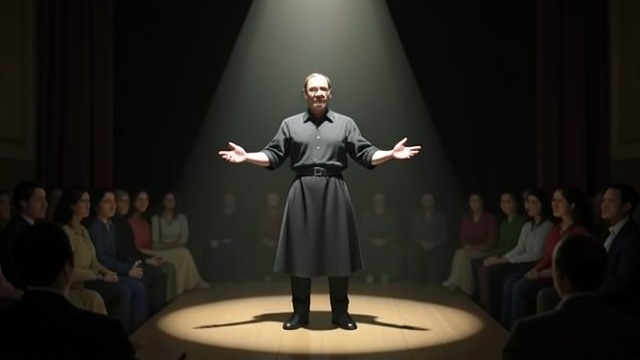
A Body Before an Audience
The visible performer
On stage, the audience sees an actor’s real body, which has its own size, movements, and physical features. Those facts do not automatically make the performer identical with the character.
The performance must make the body function as representative matter for someone who is not literally present.
Audience knowledge matters
Stage signs, costume, words, and the performance’s context guide the spectators’ interpretation. The audience participates in making the character imaginatively present.
A Character Appears
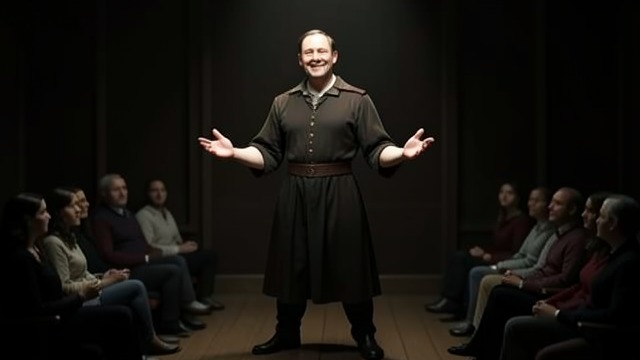
Imaginative Recognition
Sign and expression combine
Signs identify the intended character, while gesture and affective response help make that character appear through the performer. The audience does not need to mistake the actor for the character.
A performance can work even when physical resemblance is slight, because recognition and imaginative presentation involve different resources.
Shared activity
The actor’s gestures and the audience’s knowledge form a coordinated act. Their emotional response belongs to the creation of a theatrical presence rather than to a false perception.
The Character Moves the Audience
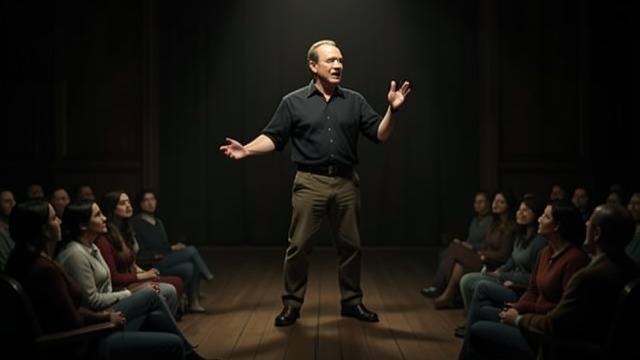
Feeling Through a Performance
Emotion without confusion
Spectators may laugh, admire, or feel concern for the character while knowing that a performance is taking place. The actor’s real body provides a medium through which an irreal figure becomes affectively significant.
The audience’s response is genuine, even though its object is not a present character in the ordinary sense.
A theatrical relationship
Sartre uses the actor’s work to clarify a broader aesthetic relation: the performer lends the body to an imaginative appearance, while the audience animates that appearance through attention and feeling.
Part I, Chapter 2, Section III
As the signs of an impersonation are recognized
At the height of the stage performance
